Tuesday, September 27, 2011

Brewing Stands: Starting Your Microbrewery Right

As you gain experience in the world of home brewing, you'll eventually find yourself outgrowing your old brewing equipment. It's even possible you're still making your wort on the kitchen stove and leaving your brew on the kitchen counter to ferment. While there's nothing wrong with either of these (most home brewers start that way) there are benefits to having equipment designed specifically for your brewing needs. When you decide to take the step from brewing in your kitchen to turning a corner of your home or garage into your very own micro brewery, you'll want to begin by looking at brewing stands. Brewing stands are the perfect start because they give you a place to put everything and will usually support the equipment you're already using so you can get set up right away with what you already have, then add new elements as you need them.

Quality brewing stands come in a variety of shapes and sizes, from simple one tier shelves to beautiful three tier models like Blichman's Top Tier. These brewing stands hold the pots and kegs you already have or can be purchased with all new ones for even more of an upgrade.

When looking at brewing stands, make sure to check out the different sizes and styles of mash tuns, liquor tanks, brew kettles and heating elements. While you may think you only want a simple two tier stand, you may find that one of the three tier brewing systems is really more your style. It's better to choose a 3 tier brew system that you can grow into than to buy something you'll end up outgrowing and having to replace. Sometimes, spending a little more money can help you save in the long run and that rule holds as true with brewing stands as it does with anything else.

A few tips before you begin building your microbrewery:

Look at the options before you make your final decision. What looks like a great deal at first might limit you in the long run. It's better to look at quality brewing stands first and add elements as you can afford them than to buy a cheap kit that you'll want to replace in less than a year.

Make sure you purchase one of the brewing stands with adjustable posts so that you can adjust your shelves if and when you need to. Blichman's brewing stands are a perfect example of this.

Don't forget the burners! You're looking at brewing stands because you want to move away from having to do everything in the kitchen. Make sure to include the burners that will make that possible in your upgrade plans.

And finally: Have fun with it! Home brewing is a fun and rewarding hobby. It isn't just about making the perfect beer to suit your taste or creating a prize winning brew for your neighborhood brewing contest. It's about making something that is uniquely yours, something you can feel proud of but also have fun doing. Brewing time is your time. Enjoy it.

The author of this article, Peter Waterman, writes on his website HomeBeerMakers .com about his greatest hobby, making his own beer. Read his articles about his favorite all grain brewing systems like the blichmann top tier.


Grab The Bookmarketer For Your Site

Tuesday, September 20, 2011

Cooking With Honey – The Healthy Sweetener

If you need to have the ability to cook candy without each of our adverse well being effects regarding exquisite sugar, darling is a superb option. Amongst different causes, honies is just metabolized more slugishly just your amazing physique, that means that you are less prone to request a single gorgeous "excessive" right consuming one thing intended by honey.

Darling may be difficult for prepare dinner while using, though, with respect to a number of reasons. Incredibly many individuals don't cook dinner as well as this task as a result of they do not know how. But as soon as you understand how to make use of sweetie using your good favourite new kitchen projects, it's not hard at all towards use.

The first problem that experts claim honey gifts happens to be those one melts away more easily that ordinary sugar. The item drawback definitely is normally eliminated because of doing your prepping also known as of baking throughout the best slightly lower heat.

The principle problem to make sure you making good food with the help of honey often is that a majority of it's a liquid. Replacing gorgeous while having honey would certainly destroy a little meals if you happen to don't bring about beneficial permitting just for the additional the liquid in which it each of our sweetie adds.

Mainly muffins, simple fast bakery, yeast bread, and so forth you may make currently the substitution without any adjustment. Cakes, xmas crackers furthermore some other dishes you need to decrease the amount regarding the liquid in the food that can subscription intended for some of the honey.

Honey can also be rather straightforward to use here in pies. Because they're wihtout a doubt considerably hummingbird nectar, you can change any carbs which has honey. In the case when ones cake filling up appears too drippy, simply boost just a little additional thickener before a person storage containers . it all inside very own quiche shell.

The flavor about honies does sometimes wind up a difficulty, but should not usually. In case you are and earn that recipe regarding you do not need the flavor being easy to see, discover several issues you'll be able to try. First of all, buy some sort of mildest flavored honies shoppers can. Usually which is will probably be a very light clover honey. (One particular paler our honey, our own more satisfying with milder the flavour, when it comes to general.)

Even if necessary, you need to use half darling, and simply half another sweetener, comparable to iphone charge focus, agave nectar, stevia, and even handsome when you have to.

At Home Cooking is a blog about how to live a more healthy, natural and balance life by cooking healthy


Grab The Bookmarketer For Your Site

Tuesday, September 13, 2011

Yerba Mate: The Drink of the Gods

Visit any village in the South American countries of Paraguay, Uruguay, southern Brazil, or northern Argentina and you'll be greeted with a warm or cold cup (depending on the time of the day you visit) of herbal Mate tea. Yerba Mate is traditional, centuries old refreshment used by the Gaurani Indians to cool them of sweltering heat. In fact, it isn't odd to find everyone from elders to youngsters sipping the brew from sunup to sundown. The tea is either brewed with sugar or taken cold without sugar. The cold version of the tea is popularly called Terere.

The tea is known for its medicinal value. The leaves are said to be rich in vitamins E, A and C, pantothenic acid, chlorophyll, and choline. Besides this the tea is said to contain other powerful antioxidants that are very beneficial to the body. No wonder, the Guarani Indians referred Yerba Mate as the 'drink of the lords'.

They drank the tea to boost immunity, cleanse the blood, tone the nervous system, reduce stress and fatigue, and also to stimulate the mind. Recent studies have proved that the tea is helpful to cure migraine, neuralgia, insomnia and headache. Regularly drinking of Yerba Mate is known to aid digestion among people suffering from gastro intestinal problems. The tea also inhibits the growth of bacteria responsible for bad breath. A number of dieticians refer the tea for its weight reducing qualities. The tea is known to speed metabolism and suppress appetite.

To make this tea, dried Yerba Mate leaves are put in a vessel that's made from cow's horn. To these leaves is added hot water. A metal straw with a strainer on its bottom is placed on the tea. The host then passes on the vessel to his guests who drinks it and then passes it over to the next guest, who will have to add hot water to drink from the tea.

The leaves were introduced to the west by Jesuit missionaries, who found that the locals never got tired after chewing the leaves of the plant. Today, there are many takers for the tea, who like it for its health benefits. While it's common knowledge that drinking the tea gives people a 'kick', the levels of Caffeine in the tea are less than they are in green tea.

The leaves are traditionally obtained by cutting branches of a tall and bulky tree. The cut leaves are then placed on brushwood and roasted slowly in holes sunk in the ground. However with an increase in demand, the tea is now cultivated as a crop and exported to countries across the world.

The author is a loose tea expert and has studied the health benefits of herbal teas throughout the world. Find Premium Yerba Mate Tea related info at the website http://www.fusiontearoom.com


Grab The Bookmarketer For Your Site

Tuesday, September 6, 2011

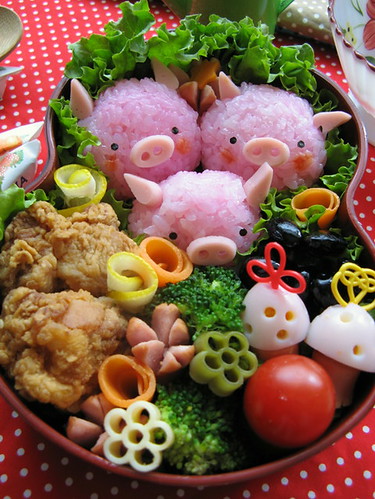
Back to School Bento


I love Japanese food. Eating at an authentic Japanese restaurant is one of the pleasures of life for me. I just adore the bento boxes, with the assortment of yummy foods in them.

A couple of weeks ago, I realized that bento boxes would make even ordinary school lunches seem extra-ordinary. I know I would enjoy lunch so much more if it were packaged in a pretty way, even if the lunch was only a sandwich and a piece of fruit. I knew I wasn’t the first one to think of this, and I was right! I sought and found a great variety of ideas for bento lunches and containers.


Before going into the practical issues, here’s a definition of “bento” from Wikipedia:

Bento is a single-portion takeout or home-packed meal common in Japanese cuisine. A traditional bento consists of rice, fish or meat, and one or more pickled or cooked vegetables as a side dish. Containers range from disposable mass produced to hand crafted lacquerware. While bento are readily available at convenience stores and bento shops throughout Japan, it is still considered an essential skill of a Japanese housewife to be able to prepare an appealing boxed lunch.

Bento can be very elaborate, aesthetically pleasing cuisine arrangements. Often the food is arranged in such a way as to resemble other objects: dolls, flowers, leaves, and so forth.

The Equipment

The traditional Japanese bento box is lacquered, and thus not microwaveable. These days, you can find bento boxes made of plastic or metal. They can be tiered or not, but the best ones to use have small compartments for the different parts of the meal.

Check these out:


This 10″ Japanese bento boxes has a black wood grain style lid and a beveled edge, a single red lacquered plastic tray that fits inside the box and is removable for easy cleaning. via Japanesegifts.com


The main compartment of this bento lunch box holds five containers of varying sizes to separate different foods. Some have covers to keep liquid food in, while the other containers can hold solid foods in place by the fold-down lid. Comes with a spoon, fork, and guide to nutritious eating. Dimensions: 9″ wide, 7″ tall, and 2″ deep. This is available at lunchboxes.com and laptoplunches.com.


This style has stacks for larger lunches. Measurements: 7.5″ tall; bottom layer is 2.5″ x 6.5″ x 6.5″; middle layer is 2.5″ x 6.5″ x 6.5″; top layer is 1.5″ x 6.6″ x 6.5″. Availalbe in square and round versions at plasticashop.com.

The Lunch

While bento is traditionally composed of rice and accompanying dishes, there’s no reason to adapt it to your favorite lunch. There’s no way I can write up all the things you can do with your bento box, so I’ll just show you some examples, and point you to sites where you can get more ideas.


For younger children, ham, radishes, red peppers and dried seaweed, lovingly prepared by mom. More photos from PBS.org.


Pasta, pineapple and blueberries from Lunchinabox. This site has tips, recipes and information galore about packing lunch in a box:

This is a fritata lunch, also from Lunchinabox.

Chicken nuggets, rice, tomatoes, beef curry and baby bok choy, from Cooking Cute. This is another great site dedicated to bento.

For even more lunch ideas, here are some sites to visit:

* If you want to know about making the traditional Japanese bento, Airandangles has all the information you need.

* The bento box group on Flickr has more than 1000 members, so you’re sure to never run out of inspiration.

* RecipeZaar has recipes for bento lunches.

Are you hungry for a bento yet? I hope this will will help make the school year’s lunches fun and more nutritious for you and your kids. Yum

Article written by Maricar Macalincag
top image by Kanto at Flick


Grab The Bookmarketer For Your Site

Tuesday, August 30, 2011

How to Make Cold Bubble Tea


What is Bubble Tea?

The bubbles in the tea are actually large tapioca pearls, which add an interesting consistency to the drink. This is a cold drink, so you need to make the tea well ahead of time so it has plenty of time to chill. Bubble tea is very popular in Asia, and it is beginning to gain popularity in the United States.
Bubble Tea Ingredients

For this recipe you need:
black tea
large tapioca pearls
milk
ice
sweetener
You also need a cocktail shaker for mixing together the drink, and extra wide straws for drinking up those bubbles.
Prepare the Tea

Begin by making a pot of black tea. While the tea is still hot sweeten it with sugar or honey. Generally, you will want to use about 1 tbsp. of sweetener per cup of tea. It is better to use less than more, because you can always add more later. Now, chill the tea in the refrigerator.
Boil the Tapioca Pearls

Tapioca is very delicate, so you want to make it right before putting the bubble tea together. Boil some water in a large saucepan. When the water is boiling, add one cup of tapioca pearls. Stir them up so they do not stick to the bottom. Follow the cooking directions for the type of tapioca that you are using. Generally, you want to let the tapioca boil for 25 minutes, then turn off the heat and let them sit covered in warm water for another 25 minutes.
Assemble the Bubble Tea

Drain the tapioca and rinse it with warm water. Add the tapioca pearls to the bottom of the cups. Pour one part tea, one part milk and some ice into the cocktail shaker. Give it a good shake so everything gets mixed up. Pour the milk, tea, and ice over the tapioca and enjoy the drink through one of the thick straws.

Thanks for watching. To learn more, visit us on the Web at food.about.com


Grab The Bookmarketer For Your Site

Tuesday, August 23, 2011

Fructose: what is it, and why is it in everything?


We all know fructose is some type of sweetener, we see it listed on so many food labels: ketchup, soft-drinks, energy drinks, cereals, cookies, breads, crackers, ice creams, canned soups, and more. And most of us think fructose has something to do with fruits. So in some way it's okay; it's just some sweetener thing derived from natural fruit sugar.

But it's not. Well it's half true. Fructose is one of the main sugars from fruits, the others being sucrose and glucose, so that's true. But the fructose found in processed foods is an entirely different story.

Food manufacturers and producers are sweetening our food with high-fructose corn syrup (HFCS) which does not come from fruits at all. It comes from a highly processed blend derived from corn, which many times can be genetically modified.

Too much HFCS in the diet means extra calories and can lead to unwanted weight gain. In addition to the unwanted pounds, weight gain can lead to health problems such as high blood pressure and diabetes.

The best way to reduce HFCS and other added sugars in your diet is check the products that you consume and look out for it on the labels. Added sugars are listed on ingredient labels as HFCS, fructose, sucrose, glucose, corn syrup, fruit juice concentrate, corn sweetener, honey and dextrose. Limit these as much as possible and try to get your sweet fix from whole fruit instead. Not only are you getting natural sugar this way, you are also getting much needed fiber and antioxidants.

The American Heart Association has specific guidelines for added sugar -- no more than 100 calories a day from added sugar for most women and no more than 150 calories a day for most men. That's about six teaspoons of added sugar for women and nine for men.

Just to put this in perspective, one 12-ounce soft drink or 1.5 fruit-flavored eight-ounce cups of yogurt has 10 teaspoons of added sugar, that's already above the guidelines for the entire day!

Most Americans get more than 22 teaspoons -- or 355 calories -- of added sugar a day, which far exceeds both the USDA guidelines and American Heart Association recommendations.

Tips to reduce the added sugar in your diet:

* Limit sugar-laden sodas.

* Limit candy high in added sugar.

* Limit the non-nutritious, sugary and frosted cereals.

* Check to see that your canned fruit is packed in water or natural juice, not syrup.

* Go easy on condiments like ketchup, BBQ sauce, and salad dressings.

* Check the content of yogurt and dairy products for added sugar.

* Avoid fast food - it's usually high in HFCS.

* Have fresh fruit as a sweet treat.

* Snack on vegetables.

* Look for 100 percent organic labels, then it's HFCS-free.

Article written by Kshamica S. Nimalasuriya MD, MPH


Grab The Bookmarketer For Your Site

Tuesday, August 16, 2011

Fact or Fiction: Is Metal Cookware is Dangerous to Use

For many years it was assumed that eating foods that that had been cooked in aluminum frying pans was dangerous to your health. Scientists had proven data showing that dangerous chemicals leached into the food as the aluminum was heated to a high temperature on the stove. Similar dangers also existed when cooking with stainless steel, non-stick pans, and cast iron. So, how much of this is true in 2011 and is it safe to cook with metal pots and pans?

Aluminum cookware was first manufactured in 1892 by the Pittsburgh Reduction Co., later known as ALCOA It gained popularity with housewives and was widely used by the 1960's. Concerns about cooking with these pans stemmed from the fact that aluminum is highly reactive. Cooking acidic foods such as tomatoes or tomato sauce can cause leaching. The food then actually absorbs the metal from the pot or pan, which means a person will be swallowing aluminum particles with their food.

But, how much consumption is too much? Aluminum is almost impossible to avoid in the environment as it can be found in our air and water. It is also found in medicines, anti-perspirants and, of course, in cookware. People consume up to 50 mg of it per day, and 3-6mg more when eating foods cooked in aluminum pans. Excessive consumption has been linked to kidney problems, anemia, calcium deficiency, MS and Alzheimer's disease.

Stainless steel, discovered around 1913, made very desirable cookware. It is made by combining carbon steel with chromium. The chromium gives this steel its stainless, corrosion resisting properties, easy cleaning ability and attractive shine. However, in order to make the cookware distribute heat evenly, nickel must be added to the steel and this can have an adverse effect on people with nickel allergies,

Another precaution with stainless steel involves cleaning techniques. Using steel wool is discouraged as metal particles can be left behind which then turn into rust. Corrosive cleaning agents may leave harmful residue if not thoroughly rinsed. And, like aluminum, some nickel leaching may occur when cooking acidic foods, especially in pans with scratches and pitting. This results in increasing a person's nickel consumption.

Leaching, rust and bacteria are the culprits with non-stick coated aluminum pans and cast iron, as well. When the non-stick coating is scratched, aluminum can leach through, as well as the plastic coating. Bacteria can grow in the scratched surface. When cast iron is allowed to rust, it becomes dangerous if the rust gets into food.

So, is the answer 'Get rid of all metal cookware-now!'? Not necessarily. The FDA has published current guidelines for safety levels of metal consumption and toxicity. The average person will consume much less aluminum and nickel than the amount considered dangerous. That being said, there are some safety tips and common sense practices to follow if you want to use metal cookware:
---Avoid cooking acidic foods in aluminum,
---Switch to anodized aluminum cookware, which has a coating that makes it non-reactive, non-porous, and virtually scratch resistant,
---Get rid of scratched or pitted cookware, especially non-stick coated,
---Avoid stainless steel if you are allergic to nickel,
---Use appropriate cleaning and care methods for aluminum, stainless steel, non-stick coated pans and cast iron,
---Do your own research and use precautions if you are concerned about Alzheimer's or other diseases that might be exacerbated by excess metal consumption.

In conclusion, the answer to the question, "Is it safe to use metal cookware?" is "Yes." Treat all cookware properly, use safety precautions, store it carefully and follow manufacturers' directions. Finally, throw it away if it becomes damaged.


Yvonne Crooker is the author and can provide more information about wrought iron kitchen accessories, including wine racks and pot racks, at Pot Rack Place. Yvonne is a retired school administrator who has time now to devote to her creative talents, including decorating, quilting, and photography.

Yvonne and her husband, Gary, a professional musician and finish carpenter, share their lakeside cottage with their two dogs and three cats.
Discover the Old World charm and rustic good looks of wrought iron racks at http://www.potrackplace.com.


Grab The Bookmarketer For Your Site